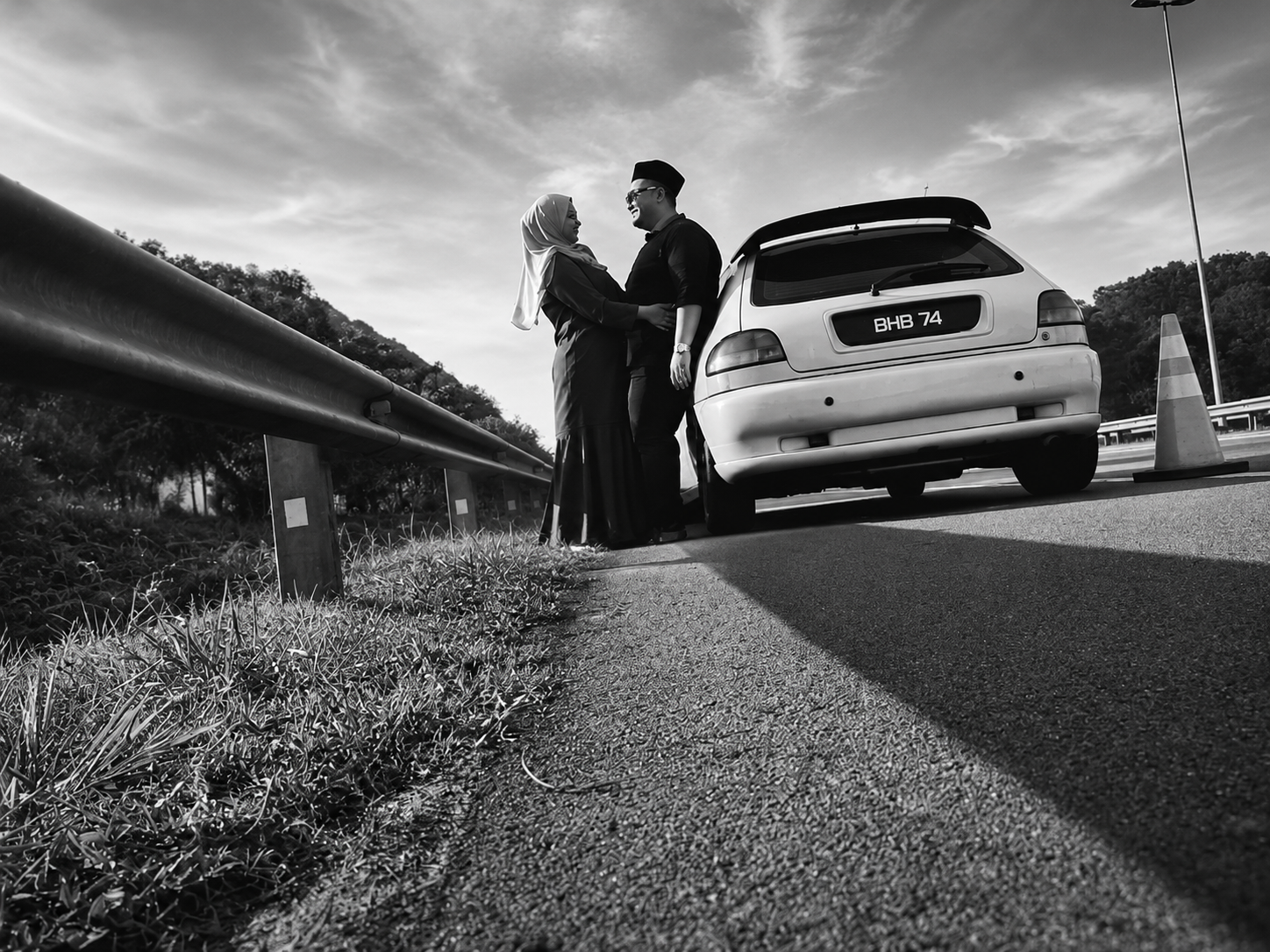
Sometime around 2003, a young engineering student decided he knew enough about love to write an essay explaining it to the world. That student was me. Twenty-two years old, probably sporting a questionable haircut, and apparently qualified to explain one of humanity’s most complicated emotions. Confidently unqualified before I even knew what to call it.
The essay was titled Of Love and Infatuation, and in it I made some rather sweeping declarations about the nature of both. Love, I argued, was secure, enduring and deep. Infatuation, on the other hand, was shallow, unpredictable and ultimately short-lived. I compared love to a favourite chair, a warm blanket, a bottomless pit and an endless road through the desert. Christ, apparently I was in love with metaphors too.
I eventually uploaded the piece to Blogspot in 2010, along with a collection of things I’d written over the years. A little attempt at preserving the literary genius of my youth, if you will. Sixteen years later, I’m reading it again, and the annoying thing is that the little bastard wasn’t entirely wrong. He just had absolutely no idea how right he was.
Back in college, there was a girl I knew. We weren’t particularly close. More of a hello-goodbye friendship, exchanging pleasantries whenever we happened to cross paths around campus. One afternoon, I spotted her at the food court looking rather miserable. She was packing her lunch to go, so I asked what was wrong. Rough day, apparently. I suggested she head home, enjoy her lunch, put her feet up and hope tomorrow would be kinder. She smiled, thanked me, and went on her way. I thought nothing of it.
A few days later, she gave me a missed call. For those too young to remember, this was the glorious era of prepaid mobile phones, when deliberately calling someone just long enough for their phone to ring before hanging up was a perfectly legitimate communication strategy. I happened to be on postpaid, so I called her back. She seemed genuinely surprised, as though I’d performed an act of extraordinary generosity rather than simply returned a phone call.
During that conversation, I mentioned I was heading out on my motorcycle to get dinner at the mamak. She lived in the neighbouring apartment complex, so I offered to pick up something for her. A few hundred metres out of my way, hardly an expedition to the North Pole. She accepted, I bought her food, dropped it off and went home. Job done. Unbeknownst to me, I was apparently becoming the male lead in a romantic comedy I hadn’t auditioned for.
Around my birthday, she decided to bake me chocolate chip cookies. Unfortunately, baking wasn’t among her more developed talents. She burnt every single batch, became terribly upset, locked herself in a friend’s bedroom and refused to come out. Naturally, her friends called me and demanded that I do something about it. Apparently, this was now my fucking problem. I hadn’t requested the cookies, much less commissioned a full-blown emotional crisis over them, but off I went.
I managed to coax her out and assured her that the cookies weren’t that bad. They were, in fact, spectacularly bad. But I told her I liked them a little crispy anyway, which was a charitable interpretation of what appeared to be a small collection of edible charcoal. Later that evening, she gave me a handmade birthday card thanking me for returning her call and making a supper run for her.
By then, the penny had finally dropped.
What I’d considered ordinary gestures of kindness had clearly meant something considerably more to her. And that’s the peculiar thing about infatuation. Sometimes you’re not falling for the person standing in front of you, but for the version of them you’ve assembled from a handful of encounters. A smile, a kind word, a returned phone call, a fucking roti canai. Before you know it, you’ve built an entire romantic narrative around someone who was simply trying to be nice.
I don’t mean to make light of her feelings. They were genuine, and she deserved someone who felt the same way. I simply wasn’t that person. The infatuation eventually passed, as these things often do, and life carried on. But the experience stayed with me because it made me wonder whether what we sometimes call love is really just our imagination getting a little ahead of reality.
Around that same period, there was someone else in my life who would teach me something considerably more important.
I’d known her since secondary school. We liked each other, knew we liked each other, and had an almost supernatural ability to get the timing wrong. Whenever one of us was ready for something more, the other was unavailable, otherwise romantically occupied or about to disappear to another part of the country. Eventually, she went off to Terengganu to study marine biology while I pursued engineering in Shah Alam. Our timing remained consistently and spectacularly shit.
During one particularly dark period in college, I called her. I wasn’t doing well. Life had become difficult in ways I couldn’t quite articulate, and I told her I wasn’t sure I wanted to carry on. It wasn’t a particularly pleasant conversation, and I don’t remember how it ended. What I do remember is that the following day, she got on an express bus from Terengganu and travelled all the way to Shah Alam.
She called when she arrived. When I met her, she kissed me, wrapped her arms around me and held me tightly. She told me that she cared, that she wanted me around, and that she would always be there for me. We spent the day together, doing very little of consequence beyond talking and enjoying each other’s company. That evening, she got back on another bus and returned to Terengganu.
I don’t remember everything we talked about that day, but I remember how it felt. Someone had travelled hundreds of kilometres simply because she was worried about me. There was no occasion to celebrate, no romantic getaway, and certainly no guarantee of getting anything in return. She just wanted to make sure I was okay.
Naturally, being young and emotionally ill-equipped, I decided this must finally be our moment. I was in a better place, she clearly cared about me, and perhaps the universe had finally decided to stop fucking with our timing. So I suggested we give the relationship another shot.
She’d started seeing someone else.
Of course she had.
As it turned out, she’d been planning to tell me how she felt during that phone call. But after hearing how badly I was struggling, she’d decided that pursuing a relationship was the last thing I needed at that moment. By the time I was ready, life had moved on. Our timing, once again, was impeccable.
That pattern continued for years. Sometimes I was available and she wasn’t. Sometimes the opposite. There were arguments, periods of silence, and occasions when one or both of us got hurt. Yet somehow, we kept finding our way back to each other.
When we were both working, we happened to live in neighbouring apartment blocks. We had keys to each other’s places, and sometimes, during a particularly nasty thunderstorm or on a lonely evening, one of us would turn up at the other’s apartment. We’d talk, climb into bed, hold each other and fall asleep. Nothing else happened. Nothing needed to. Somewhere along the way, we’d stopped trying to force what we had into a conventional romantic relationship.
We’re still close today, more than two decades later. We still tell each other we love each other, because we do. I tell my male friends I love them too, much to the possible discomfort of anyone who believes affection between men should be expressed exclusively through insults and occasional shoulder punches.
I’ve never understood why people feel the need to ration those three words. You love who you love. It doesn’t always have to be romantic, and it certainly doesn’t have to lead to marriage. Some relationships simply evolve into something different, something that doesn’t fit neatly into the categories we’re accustomed to using.
Which brings me to the woman I eventually married.
I’ve always been a romantic, despite the occasional broken heart and temporary declaration that love was a complete waste of time. And eventually, I found someone who made all those years of believing seem worthwhile. Or, more accurately, I found someone who was willing to marry me, which remains one of the more impressive lapses in judgement I’ve ever witnessed.
I’m not an especially easy person to live with. I have a temper, I’m impatient, I can be irritatingly abrupt, and I occasionally behave as though being right is a competitive sport. I also possess an extraordinary ability to develop an entirely new life ambition every other Tuesday. Today I want to be a DJ, tomorrow a carpenter, and by the weekend I might be contemplating a career in something I discovered on YouTube six hours earlier.
My wife has seen all of this, and somehow, she’s still here.
When I was diagnosed with ADHD, we both began to understand certain aspects of my behaviour differently. Things she’d previously interpreted as carelessness, inattentiveness or a general inability to get my shit together began to make more sense. And one day, she apologised. She told me she’d misunderstood certain things about me, that she’d sometimes judged me unfairly, and that she wanted to be more understanding.
I hadn’t demanded an apology. She simply recognised something, reconsidered her perspective and said she was sorry. No argument, no wounded pride, no lengthy negotiation over who was right. Who the fuck does that?
Someone who loves you, apparently.
And I suppose that’s one of the things marriage has taught me. Being loved isn’t simply about finding someone who accepts your imperfections. It’s also about caring enough to work on the ones that hurt them. I’ve had to learn to manage my temper, to be less abrupt, to listen more and to recognise that my way of showing affection isn’t necessarily the way my wife wants to receive it. I’m a physical-touch-and-acts-of-service sort of person. She appreciates those things too, but words of affirmation mean a great deal to her. I’ve learnt that sometimes a few kind words accomplish considerably more than whatever elaborate solution I’ve decided to engineer.
Perhaps the clearest demonstration of our relationship came during the years we lived in Qatar. I wasn’t earning much, and for a while, I was earning precisely fuck all. I picked up occasional freelance jobs, made phone calls, chased opportunities back in Malaysia and generally tried to find my footing. My wife, meanwhile, supported us financially.
She never once made me feel inadequate because of it.
If we went out for dinner with friends or family, she’d quietly slip me her credit card or some cash under the table so I could settle the bill. She understood that my pride was having a difficult enough time without my bank account adding insult to injury. It wasn’t something I asked her to do. She simply knew me well enough to recognise what mattered.
Every morning, I’d drive her to work, and every evening I’d pick her up. Before leaving the car, she’d give me a kiss on the cheek and thank me. Sometimes she’d catch me making calls, trying to find work, and she’d come over, give me a hug and say, “Thank you for trying, sayang.”
I’d ask what on earth she was thanking me for. I hadn’t secured a job, brought home a salary or accomplished anything particularly noteworthy. But she’d seen me making an effort, and that was enough for her to acknowledge it.
There’s something profoundly disarming about being appreciated when you feel you have very little to offer. She never kept score. We weren’t competing to see who contributed more, and there was no running tally of who owed whom. For years I’d been the one taking care of her financially. Now it was her turn, and as far as she was concerned, that was simply how a marriage worked. We took care of each other.
What surprised me was how much those small gestures changed me. I’d spent a good portion of my younger years being rather self-centred, convinced that I knew better than most people and generally treating compromise as something other people should consider. Yet here was someone who could ask me to do something I didn’t particularly enjoy, and I’d find myself wanting to do it simply because I knew it would make her happy. She didn’t demand it. She’d ask, tell me how much she’d appreciate it, and thank me when I tried. Often with a hug and a kiss.
Annoyingly effective, that woman.
My mother once told me something that stayed with me: “If you have to fight to stay together, then what’s the point?”
I don’t think she meant relationships should be effortless. Marriage certainly isn’t. People argue, irritate each other, say stupid things and occasionally require some time apart before remembering why they liked each other in the first place. God knows I’ve contributed my fair share to that particular department. But there’s a difference between working through disagreements and constantly fighting to keep a relationship alive.
With my wife, I’ve never felt like I had to convince her to love me, and she’s never had to convince me. We have our disagreements, of course. Usually over things so spectacularly mundane that neither of us can remember what started the argument by the following morning. But I’ve never gone to bed wondering whether our marriage was about to fall apart.
And I think that’s what my younger self was trying to describe when he wrote about love being secure, deep and enduring. He imagined security as something love simply provided. What he hadn’t yet understood was how two people create that security through thousands of ordinary decisions, often made without any fanfare whatsoever.
There’s something my wife and I say to each other that probably sounds rather morbid to anyone listening.
“Don’t die first. Let me die first.”
The reasoning is embarrassingly simple. Neither of us wants to be the one left behind. We both want to escape the unbearable business of learning to live without the other, which means we’re essentially volunteering our beloved spouse for a lifetime of grief while reserving the more convenient exit for ourselves.
Romance, ladies and gentlemen. Selfishness with excellent branding.
But I understand the sentiment. Somewhere between falling in love, getting married, moving countries, dealing with financial uncertainty and learning to live with each other’s imperfections, this person became home. Not a particular house or city, but the place where I can exist without having to constantly explain or defend who I am.
And the thought of that no longer being there is something neither of us particularly enjoys contemplating. So we tell each other not to die first, as though the universe might appreciate our scheduling preferences.
Idiots. Hopelessly in love idiots.
Reading my old essay now, more than twenty years after writing it, I find myself surprisingly reluctant to correct the young man who wrote it. He was earnest, hopelessly romantic and perhaps a little too enthusiastic about comparing emotional experiences to geographical features. But the fundamental argument was sound.
I’d tell him to keep believing in love, even when life gives him perfectly reasonable excuses not to. I’d tell him that the occasional broken heart isn’t proof that love is a con, and that he shouldn’t confuse the excitement of being wanted with the deeper satisfaction of being understood.
I’d also tell him that love isn’t always thrilling. Sometimes it’s inconvenient, repetitive and spectacularly ordinary. Sometimes it means swallowing your pride, admitting you’re wrong, or doing something you’d rather not do because it matters to someone else. And sometimes, on the days when you don’t particularly love yourself, someone else’s love is what pulls you back.
What I wouldn’t tell him is that love fixes everything. It doesn’t. It won’t magically resolve your flaws, make your problems disappear or turn you into a better human being simply because you’ve found someone willing to put up with you. You still have to do the work. You still have to show up.
But if you’re fortunate, you’ll find someone who makes you want to.
So yes, I’d probably change a few of the metaphors in that old essay. Definitely the punctuation. Perhaps tone down the bottomless pits and endless deserts. But I wouldn’t change what I was trying to say.
Infatuations are fun, but love is final.
And if you’re lucky enough to find the sort of love that makes you feel safe, seen and genuinely appreciated, don’t take it for granted. Tell the people you love that you love them. Thank them for the little things. Hold them a little longer when you can.
And for fuck’s sake, try not to die first.
Although, knowing my wife, she’s probably planning exactly the same thing.